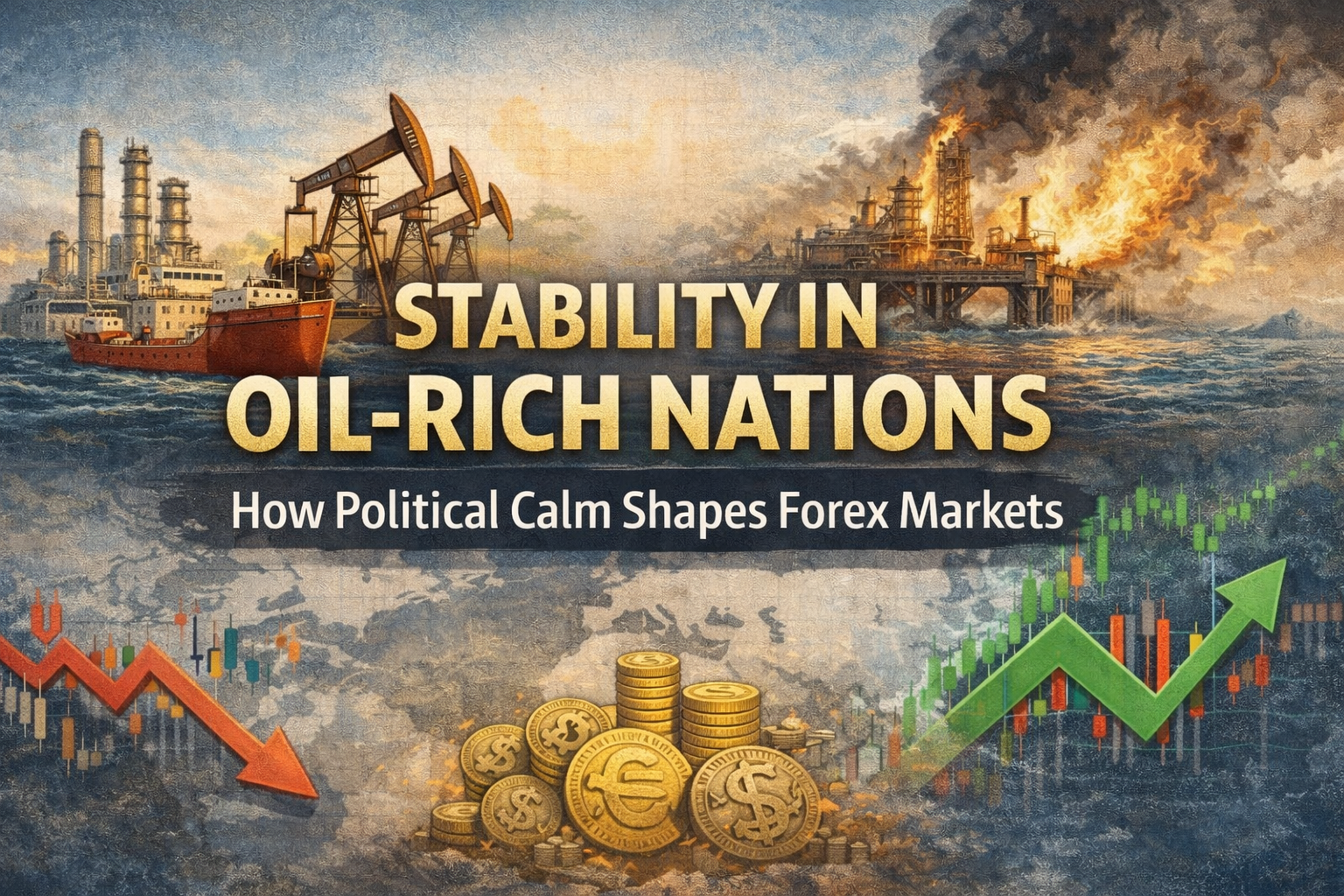
Discover how Stability in Oil-Rich Nations influences global forex markets, oil prices, currency strength, investor confidence, and international capital flows.
Table of Contents
Introduction: Why Politics in Oil-Rich Nations Matters to Forex
Foreign exchange markets are often seen as numbers driven by interest rates, inflation data, and central bank speeches. But beneath the charts and trading screens lies a powerful force that quietly moves currencies across the world—political stability.
In countries rich in oil and energy resources, politics and money are deeply intertwined. Oil revenues fund governments, support currencies, and attract foreign investment. When political systems are stable, markets tend to reward those nations with currency strength and investor trust. When instability appears, forex markets react swiftly—often before the average citizen even notices.
Understanding Stability in Oil-Rich Nations is essential for traders, investors, policymakers, and even ordinary people, because the effects ripple far beyond national borders.
Understanding the Link Between Oil and Currencies
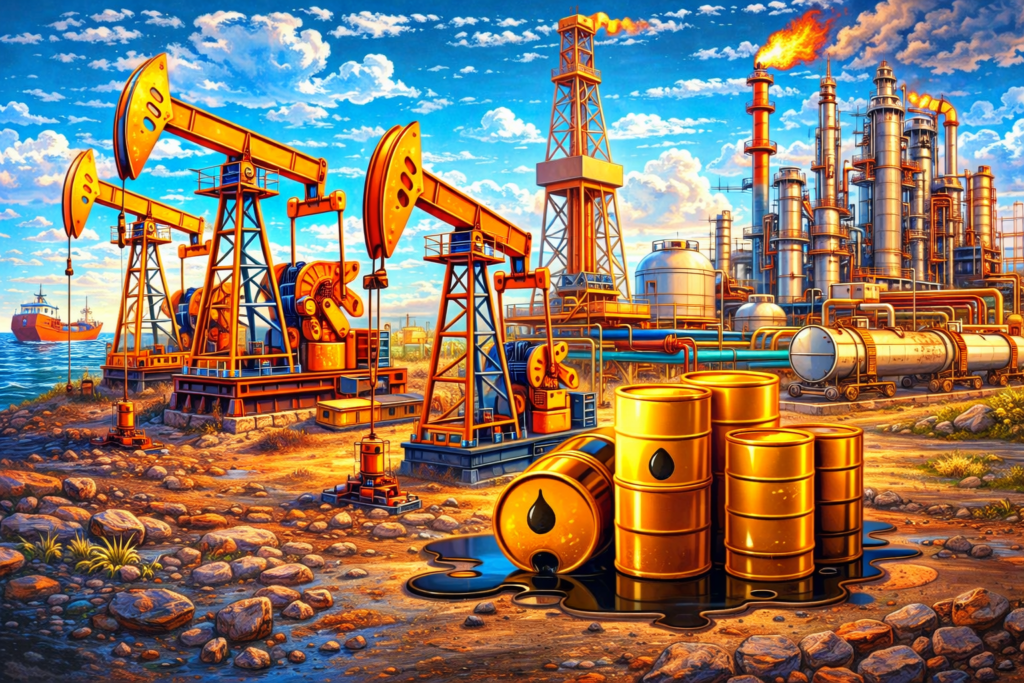
Oil is priced globally in U.S. dollars and remains one of the most traded commodities in the world. Countries that export oil depend heavily on steady production and predictable governance to maintain revenue flows.
When oil exports are reliable:
- Government revenues become predictable
- Foreign reserves remain stable
- Exchange rates face less pressure
But when political uncertainty enters the picture—through protests, sanctions, regime changes, or conflicts—the oil supply chain is disrupted. This uncertainty immediately feeds into forex markets through speculation, capital flight, and risk repricing.
This is where Stability in Oil-Rich Nations becomes a key determinant of currency performance.
Why Political Stability Reassures Forex Markets
Political stability signals continuity. For forex markets, continuity means fewer surprises.
Key Signals Forex Markets Watch
- Respect for contracts and oil agreements
- Stable leadership and policy direction
- Control over domestic security and infrastructure
- Transparent fiscal and monetary coordination
When these elements exist, traders are more willing to hold a country’s currency, even during global volatility. Stable oil exporters are perceived as lower risk compared to nations facing political fragmentation.
This explains why currencies of politically stable energy exporters often remain resilient—even during global downturns.
How Instability in Oil-Rich Nations Triggers Currency Volatility
Political instability does not need to escalate into war to affect currencies. Even rumors or uncertainty can be enough.
Common triggers include:
- Sudden leadership changes
- Threats of sanctions
- Nationalization of oil assets
- Internal unrest near oil-producing regions
Forex markets react by:
- Selling the affected currency
- Increasing demand for safe-haven currencies
- Raising risk premiums on bonds and assets
As confidence drops, the currency weakens, inflation rises, and borrowing costs increase—creating a feedback loop that further damages economic stability.
Oil Supply Disruptions and Global Currency Movements
Oil-rich nations do not operate in isolation. Disruptions in one region affect global energy prices, which in turn influence multiple currencies.
When oil supply fears rise:
- Oil-importing countries see higher inflation
- Their currencies may weaken due to trade deficits
- Oil-exporting nations with stability may benefit
This dynamic explains why forex markets closely track political developments in oil-producing regions. Stability in Oil-Rich Nations acts as an anchor for global energy pricing and currency alignment.
For a deeper understanding of oil price dynamics:
https://www.investopedia.com/terms/o/opec.asp
Investor Confidence and Capital Flows
Foreign investors look for two things above all else: returns and safety. Political stability provides the foundation for both.
Stable oil-rich nations attract:
- Long-term foreign direct investment
- Infrastructure and energy financing
- Sovereign bond demand
These capital inflows strengthen foreign exchange reserves and support local currencies. Conversely, instability leads to rapid capital outflows, currency depreciation, and higher volatility.
This is why forex markets often move sharply on political headlines—even before oil production is actually affected.
Safe-Haven Flows During Political Shocks
When instability rises in oil-producing regions, global forex markets shift into “risk-off” mode.
This usually leads to:
- Stronger U.S. dollar
- Appreciation of Japanese yen and Swiss franc
- Weakening of emerging market currencies
These moves are less about fundamentals and more about fear management. Political instability increases uncertainty, and uncertainty is the enemy of currency stability.
Understanding Stability in Oil-Rich Nations helps explain why global forex markets sometimes move sharply without clear economic data.
Impact on Emerging Market Currencies
Many oil-rich nations fall into the emerging market category. Their currencies are often more sensitive to political risk due to:
- Limited financial buffers
- Dependence on oil revenues
- Higher foreign debt exposure
When stability exists, emerging market currencies can outperform during growth cycles. When instability rises, they are often the first to suffer.
This sensitivity makes political developments in oil-rich emerging economies a major focus for forex traders worldwide.
Reference on political risk and markets:
https://www.worldbank.org/en/topic/governance
Long-Term Forex Implications of Sustained Stability
Political stability does not just influence short-term currency movements—it shapes long-term trends.
Sustained stability allows:
- Diversification beyond oil
- Stronger institutions
- More credible central banking
- Reduced reliance on commodity cycles
Over time, this creates currencies that are less volatile and more attractive to global investors. In contrast, recurring instability traps nations in cycles of devaluation and inflation.
Thus, Stability in Oil-Rich Nations is not merely a political concept—it is a long-term currency strategy.
Lessons for Forex Traders and Investors
For anyone involved in forex or global investing, ignoring political stability is a costly mistake.
Practical takeaways:
- Track political developments alongside economic data
- Monitor oil production zones and policy announcements
- Understand risk sentiment shifts during geopolitical events
- Diversify exposure across stable and unstable regions
Forex markets are forward-looking. Political signals often matter as much as interest rates or GDP figures.
The Bigger Picture: Politics as a Financial Force
In today’s interconnected world, politics and finance are inseparable. Oil-rich nations sit at the heart of this relationship, acting as bridges between energy markets, government power, and global currencies.
While economic indicators explain part of the forex story, political stability explains the confidence behind those numbers.
Understanding Stability in Oil-Rich Nations helps decode why currencies move the way they do—and why some shocks feel sudden while others barely register.
Final Verdict: Why Stability Shapes Forex More Than Oil Prices Alone
Oil prices matter, but politics decides whether oil wealth becomes a blessing or a burden.
Stable governance transforms energy resources into currency strength. Instability turns the same resources into sources of volatility and risk.
For global forex markets, political stability is not background noise—it is a leading signal.
As global tensions rise and energy politics become more complex, the importance of Stability in Oil-Rich Nations will only grow stronger.
Final Thoughts
Forex markets may look technical, but they are deeply human—driven by trust, fear, and confidence. Political stability provides the trust that currencies need to function smoothly.
In a world where oil remains central to global growth, the political foundations of oil-rich nations will continue to shape exchange rates, capital flows, and financial security worldwide.
👉 In forex markets, stability is not optional—it is the currency of confidence.
Discover how Currency Wars shape everyday life across the world—affecting prices, jobs, savings, travel, and long-term financial security during global economic tensions.