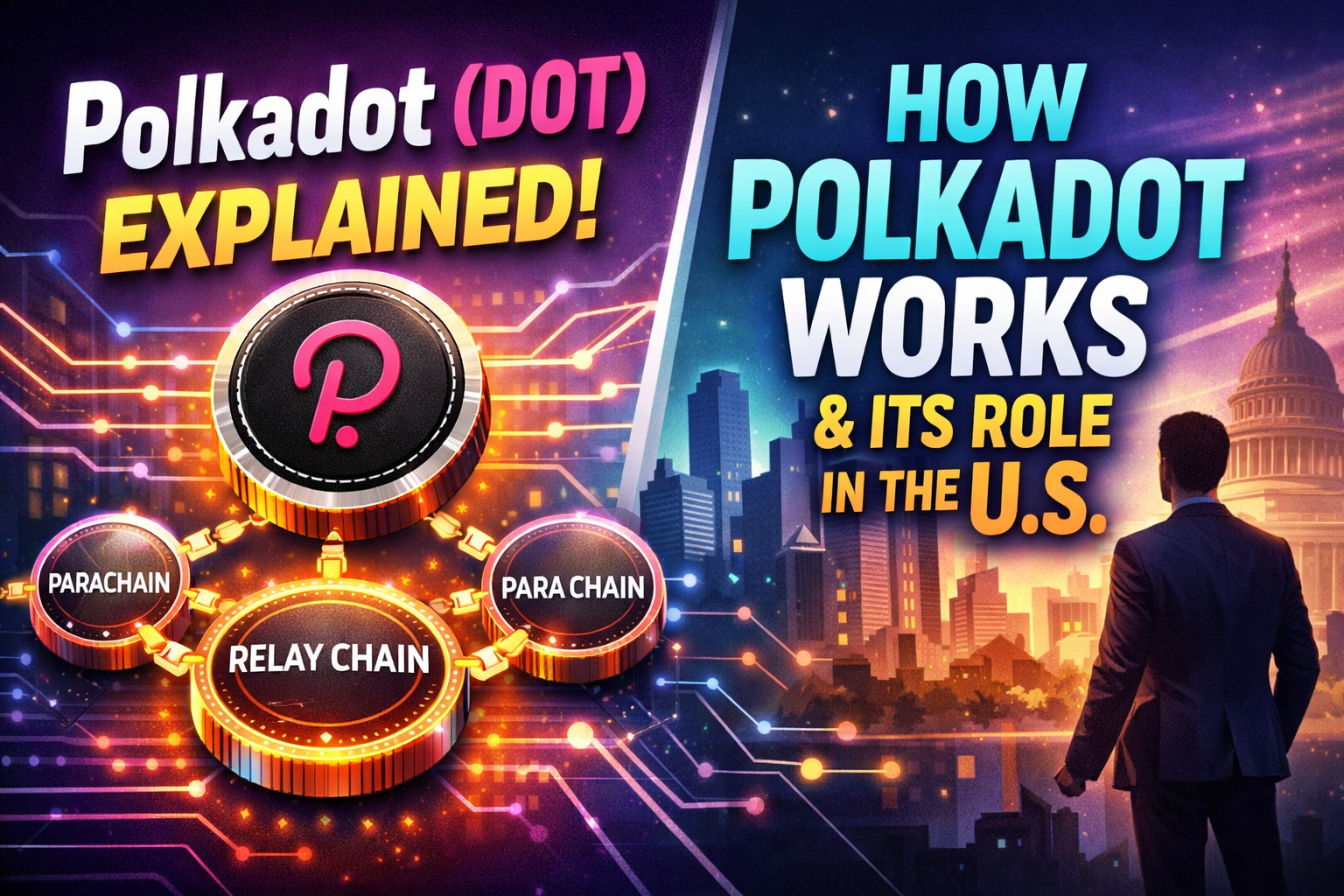
Polkadot (DOT) Explained: How Polkadot Works in the United States
Learn what Polkadot (DOT) is, how it works, its legal status in the United States, use cases, benefits, risks, taxes, and future outlook.
Table of Contents
Introduction
Polkadot (DOT) is one of the most innovative blockchain platforms in the cryptocurrency ecosystem. Designed to solve one of blockchain’s biggest challenges—interoperability—Polkadot allows multiple blockchains to communicate, share data, and transfer assets securely.
In the United States, Polkadot has gained attention from developers, Web3 startups, researchers, and long-term investors who see it as a foundation for the next generation of decentralized applications and multi-chain infrastructure.
This article explains what Polkadot (DOT) is, how it works, its legal status in the United States, use cases, advantages, risks, and future outlook in clear, human-friendly language.
What Is Polkadot (DOT)?
Polkadot is a Layer-0 blockchain protocol that connects multiple independent blockchains into a single, unified network.
Polkadot enables:
- Interoperability between blockchains
- Shared security across networks
- Scalable decentralized applications
- Cross-chain data and asset transfers
DOT is the native cryptocurrency of the Polkadot network and is used for:
- Network governance
- Staking and security
- Bonding parachains
- Paying certain network fees
Polkadot is designed to support a multi-chain future, rather than a single dominant blockchain.
Who Created Polkadot?
Polkadot was founded by Dr. Gavin Wood, one of the co-founders of Ethereum and the creator of the Solidity programming language.
The project is developed and supported by:
- Web3 Foundation (based in Switzerland, with strong US ties)
- Parity Technologies (core blockchain development)
Polkadot’s strong academic and engineering background has made it attractive to US developers and research-driven blockchain projects.
How Does Polkadot Work?
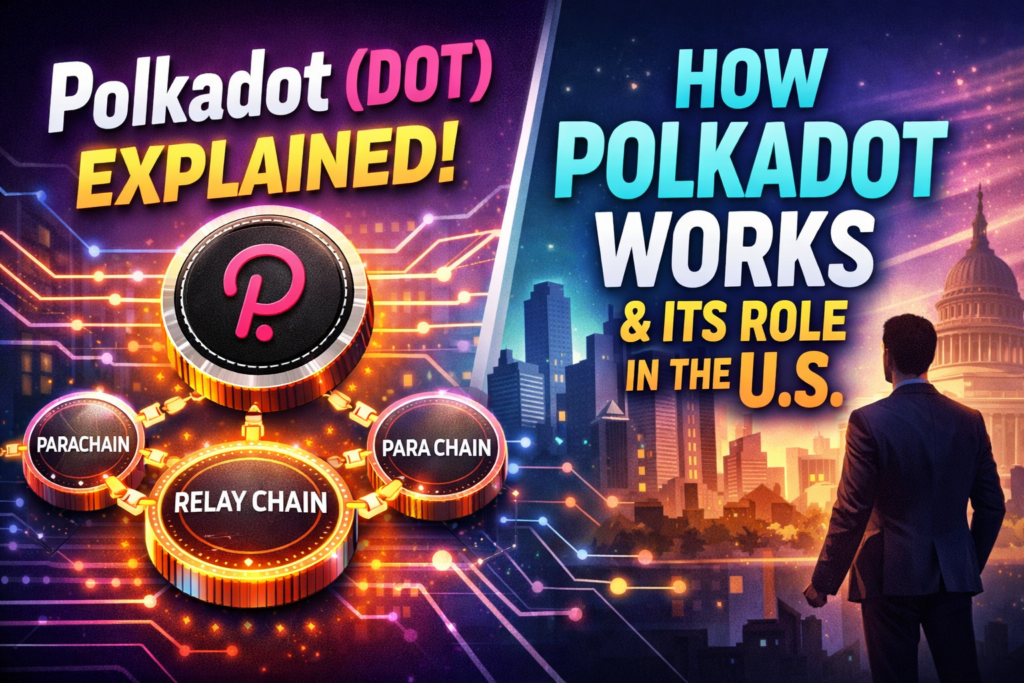
Polkadot uses a unique architecture made up of multiple components working together.
Key Polkadot Components
1. Relay Chain
The Relay Chain is the core of Polkadot. It:
- Provides shared security
- Coordinates consensus
- Manages cross-chain communication
2. Parachains
Parachains are independent blockchains that connect to Polkadot. Each parachain can:
- Have its own rules and use cases
- Support smart contracts, DeFi, NFTs, or data services
- Communicate with other parachains
3. Nominated Proof of Stake (NPoS)
Polkadot uses Nominated Proof of Stake, where:
- DOT holders stake tokens
- Validators secure the network
- Nominators help choose trustworthy validators
This system is energy-efficient and secure.
Why Polkadot Is Important in the United States
Polkadot is important in the US crypto ecosystem because:
- It focuses on interoperability, a major US Web3 priority
- It supports complex, multi-chain applications
- It attracts US-based developers and startups
- It aligns with enterprise and institutional innovation
- It promotes decentralized governance and security
As US blockchain adoption grows, interoperability platforms like Polkadot are becoming increasingly relevant.
Polkadot Use Cases in the United States
1. Web3 and Multi-Chain Applications
US developers use Polkadot to build:
- Cross-chain dApps
- Decentralized identity systems
- Data-sharing platforms
2. DeFi (Decentralized Finance)
Polkadot supports DeFi projects that:
- Operate across multiple blockchains
- Reduce congestion and fees
- Improve liquidity efficiency
3. Enterprise and Institutional Blockchain
Polkadot’s architecture allows:
- Custom blockchains with specific rules
- Regulatory-friendly designs
- Secure cross-network communication
This appeals to US enterprises exploring blockchain technology.
4. Governance and DAOs
DOT holders can:
- Vote on protocol upgrades
- Influence network decisions
- Participate in decentralized governance
This governance model aligns well with US decentralization principles.
Is Polkadot (DOT) Legal in the United States?
Yes. Polkadot (DOT) is legal to own, hold, and trade in the United States.
Key points:
- DOT is available on US-compliant crypto exchanges
- Ownership is not illegal
- Regulation focuses on exchanges and platforms
- Users must follow KYC and AML rules
Polkadot operates within the same evolving regulatory environment as other major cryptocurrencies.
Polkadot and US Regulation
US crypto oversight includes:
- SEC (Securities and Exchange Commission)
- CFTC (Commodity Futures Trading Commission)
- US Treasury and FinCEN
Polkadot’s decentralized governance and utility-based design are often viewed positively in discussions around blockchain infrastructure rather than speculative assets.
Polkadot vs Ethereum (US Perspective)
| Feature | Polkadot (DOT) | Ethereum (ETH) |
|---|---|---|
| Architecture | Multi-chain | Single main chain |
| Interoperability | Native | Limited |
| Scalability | High | Layer-2 dependent |
| Governance | On-chain | Off-chain |
| US Developer Adoption | Growing | Very high |
Polkadot complements Ethereum by enabling cross-chain ecosystems.
Advantages of Polkadot (DOT)
- Native blockchain interoperability
- Shared security across chains
- Energy-efficient Proof of Stake
- Strong governance system
- Flexible and scalable architecture
- Growing US developer interest
Risks and Challenges of Polkadot
- Complex architecture for beginners
- Competition from other interoperability solutions
- Slower ecosystem growth compared to Ethereum
- Regulatory uncertainty affecting all crypto assets
- Market volatility
US users should view Polkadot as a long-term infrastructure project, not just a short-term investment.
Polkadot (DOT) and Taxes in the United States
DOT transactions are subject to US tax laws.
Taxable events include:
- Selling DOT for USD
- Trading DOT for other cryptocurrencies
- Using DOT for payments
- Earning DOT from staking rewards
Holding DOT alone is generally not taxable, but accurate IRS reporting is required.
Future of Polkadot in the United States
Polkadot’s future in the US looks promising due to:
- Rising demand for blockchain interoperability
- Growth of Web3 and multi-chain apps
- Increased developer adoption
- Institutional interest in scalable infrastructure
As blockchain networks expand, Polkadot is well-positioned to serve as a core connectivity layer.
Is Polkadot Safe to Use in the US?
Polkadot is widely regarded as secure, but users should:
- Use reputable US-compliant exchanges
- Store DOT in secure wallets
- Understand tax and regulatory obligations
- Diversify crypto holdings
Good security practices are essential.
Conclusion
Polkadot (DOT) is a next-generation blockchain platform built for a multi-chain world. In the United States, Polkadot stands out as a key infrastructure project focused on interoperability, scalability, and decentralized governance.
As the US crypto ecosystem continues to mature, Polkadot is likely to play an important role in connecting blockchains and enabling the future of Web3 innovation.