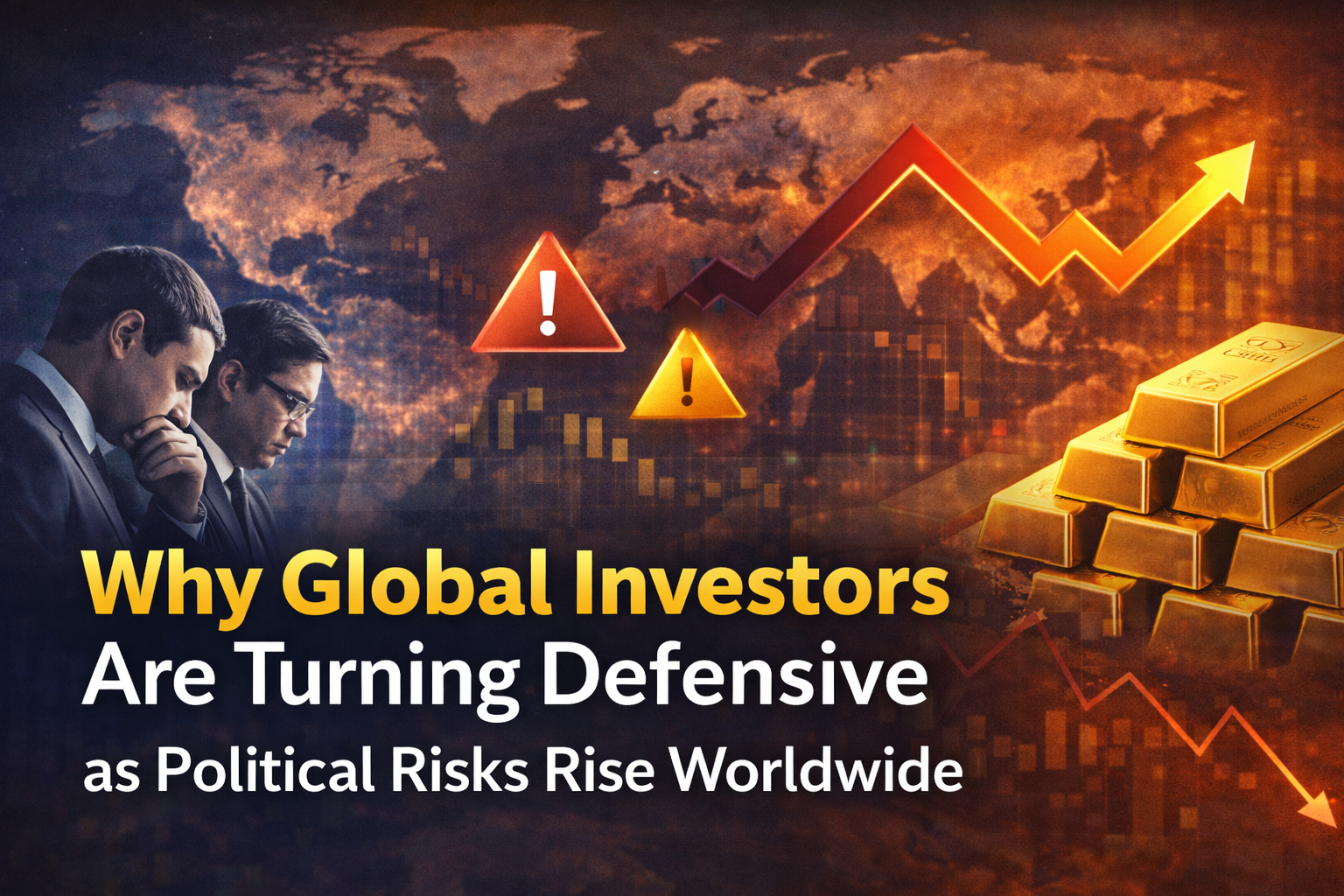
As Political Risks Rise across the globe, investors are shifting toward defensive strategies. Learn why uncertainty is reshaping markets and how global capital is responding.
Table of Contents
Introduction: A Noticeable Shift in Investor Mood
Across global financial markets, a subtle but important shift is underway. Investors who once chased growth and high returns are increasingly focused on capital preservation. This defensive posture is not driven by a single event, but by a growing sense that political uncertainty is becoming a lasting feature of the global landscape.
As Political Risks Rise worldwide, investors are reassessing assumptions about stability, growth, and risk. Elections, conflicts, policy reversals, and geopolitical rivalries are no longer viewed as short-term disruptions—they are shaping long-term investment decisions.
This blog explores why global investors are turning defensive, what political risks are driving this behavior, and how markets are adapting to a more uncertain world.
What Does “Turning Defensive” Really Mean?
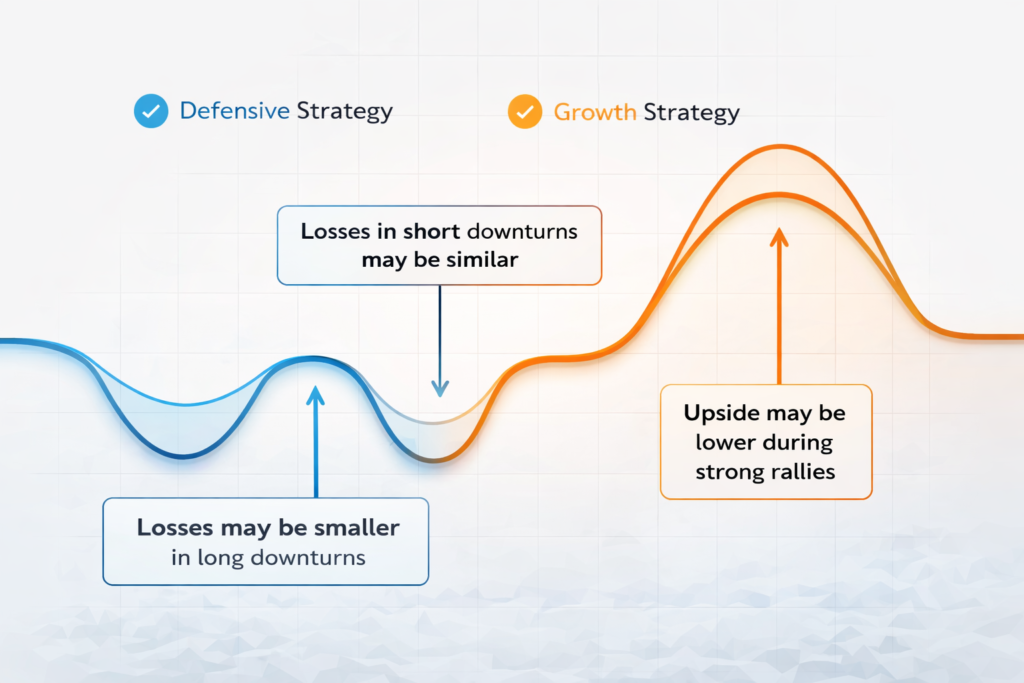
When investors become defensive, they prioritize safety over aggressive growth. This does not mean abandoning markets altogether, but rather adjusting portfolios to reduce exposure to sudden shocks.
Common defensive moves include:
- Increasing holdings of cash or cash-like assets
- Allocating more to gold and other safe-haven assets
- Favoring government bonds over equities
- Reducing exposure to volatile regions or sectors
This shift becomes more pronounced when Political Risks Rise simultaneously across multiple regions.
Why Political Risk Matters More Than Ever
Political risk has always existed, but its influence on markets has intensified. In a deeply interconnected global economy, decisions made by governments can ripple across borders instantly.
Today’s political risks include:
- Sudden policy changes
- Trade restrictions and sanctions
- Military conflicts and regional instability
- Election-driven uncertainty
- Regulatory unpredictability
These factors inject volatility into markets and make long-term forecasting more difficult.
Elections and Policy Uncertainty
Elections in major economies often trigger market anxiety. Investors worry about shifts in fiscal policy, taxation, regulation, and international relations.
When leadership changes—or when outcomes are contested—markets may struggle to price future policy direction. As Political Risks Rise, investors hedge against surprises by reducing exposure to riskier assets.
For global political and economic reporting, see:
https://www.reuters.com
Geopolitical Tensions and Global Capital Flows
Geopolitical rivalries have become a defining feature of the current era. Strategic competition between major powers affects trade routes, energy supplies, and financial systems.
When tensions escalate:
- Capital flows toward perceived safe jurisdictions
- Emerging markets may experience outflows
- Currency volatility increases
These dynamics reinforce defensive investment behavior, especially among institutional investors managing long-term capital.
Trade Conflicts and Economic Fragmentation
Trade policy has become a geopolitical tool. Tariffs, export controls, and sanctions are increasingly used to pursue strategic goals.
This fragmentation of global trade creates uncertainty for businesses and investors alike. Supply chains become less predictable, and profit margins are harder to forecast. As a result, defensive positioning becomes a rational response when Political Risks Rise.
For insights on global trade trends, explore:
https://www.weforum.org
The Role of Central Banks in a Political World
Central banks aim to remain independent, but political pressure is growing. Governments facing economic stress may push for looser monetary policy or increased intervention.
Investors closely watch these dynamics. Concerns about policy credibility or institutional independence can undermine confidence in currencies and financial markets—another reason investors adopt defensive strategies.
Asset Classes Benefiting From Defensive Shifts
As investors grow cautious, certain assets tend to benefit.
Gold and Precious Metals
Gold often performs well during periods of political uncertainty. Its appeal lies in its perceived neutrality and long-standing role as a store of value.
Government Bonds
High-quality sovereign bonds remain a cornerstone of defensive portfolios, especially when growth outlooks weaken.
Defensive Equities
Sectors such as utilities, healthcare, and consumer staples are viewed as more resilient during turbulent periods.
Investor Psychology: Fear, Memory, and Risk
Markets are not purely rational. Past crises shape present behavior. Many investors remember how quickly political shocks escalated into financial crises in previous decades.
As Political Risks Rise, fear of extreme outcomes—however unlikely—drives precautionary action. Defensive strategies provide psychological comfort as much as financial protection.
The Impact on Emerging Markets
Emerging markets often feel the effects of political risk most acutely. Capital outflows, currency depreciation, and higher borrowing costs can follow global risk-off periods.
Even countries with strong fundamentals may suffer when global investors pull back broadly. This reinforces the uneven global impact of political uncertainty.
Are Defensive Strategies Here to Stay?
The key question is whether this defensive stance is temporary or structural. Many analysts argue that political uncertainty is no longer cyclical—it is persistent.
Frequent elections, geopolitical rivalry, and shifting alliances suggest that Political Risks Rise may remain a defining feature of the investment environment. If so, defensive strategies could become a permanent component of portfolio construction rather than a short-term adjustment.
What This Means for Individual Investors
For individual investors, the global shift toward defense offers important lessons:
- Diversification matters more than ever
- Overconcentration in risky assets increases vulnerability
- Long-term planning should account for political uncertainty
Defensive investing does not mean avoiding growth—it means balancing opportunity with resilience.
For foundational investing concepts, see:
https://www.investopedia.com
A World of Cautious Capital
As political complexity deepens, global capital is becoming more selective. Investors are learning to operate in an environment where stability cannot be taken for granted and where sudden changes are part of the norm.
The defensive turn reflects adaptation, not panic. It signals a recognition that risk management is as important as return generation when Political Risks Rise across borders.
Conclusion: Defense as a Strategy, Not a Retreat
The global move toward defensive investing highlights how deeply politics and markets are now intertwined. Investors are responding rationally to uncertainty by protecting capital and seeking stability.
While growth opportunities still exist, the current environment demands caution. As political risks continue to shape economic outcomes worldwide, defensive strategies are likely to remain central to how investors navigate the future.
As thousands of New York City nurses prepare to strike this January, we analyze the financial fallout for hospitals, the cost of “travelers,” and the battle over safe staffing for more information Click Here