How Commodity Price Wars between nations and markets — across energy, food and metals — can trigger the next global price shock, affect inflation, and reshape trade and investment decisions.
Table of Contents
Commodity Price Wars — Why the Next Price Shock Could Be Bigger Than You Think
Commodities are the raw pulse of the global economy. When their prices move, everything from grocery bills to mortgage rates and manufacturing costs ripples outward. Lately, geopolitical rivalry, climate shocks, and policy responses have combined to create what I’ll call Commodity Price Wars — competing moves by states, traders, and corporations that push prices to extremes and make volatility the new normal.
This isn’t just an economist’s chart-talk. Real people feel it at the pump, in supermarket aisles, and when their pensions get repriced. In this article I’ll explain the drivers across three big commodity groups — energy, food, and metals — show how they interact, and suggest what governments, firms, and households can do to reduce harm.
Why Energy Conflict Feeds Price Shocks
Energy markets have been the most visible casualty of geopolitics. Oil, natural gas, and coal prices respond not only to supply and demand but to sanctions, port closures, pipeline politics, and strategic stockpiling. When a major exporter curtails exports or when navies disrupt shipping lanes, crude and LNG prices spike almost immediately. That spike bleeds into transport costs, electricity bills, and the price of fertilizers (most of which are natural-gas intensive to produce).
Two structural changes make energy-driven shocks more damaging today. First, the global market is tighter than before: spare capacity is lower and some projects take years to bring online. Second, the energy transition itself creates tricky overlaps — shortages in one commodity (e.g., natural gas) can raise demand for another (e.g., coal), producing unpredictable price cascades.
For background on energy market dynamics, see the IEA’s analysis of oil and gas markets: https://www.iea.org/topics/energy-security
Food — Fragile, Local, and Politically Explosive
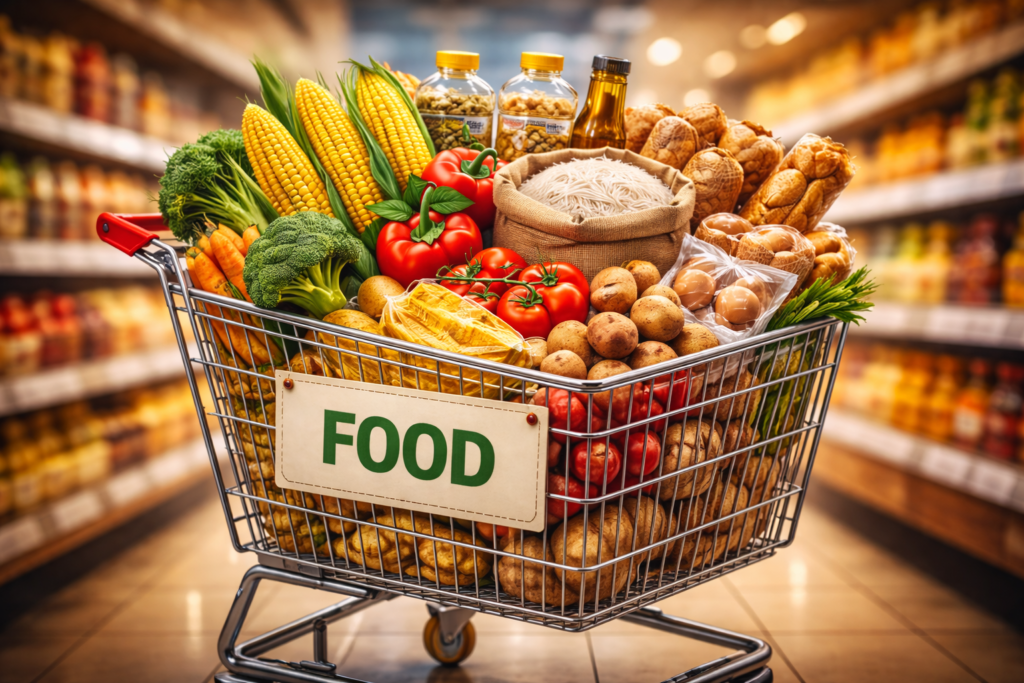
Food markets are notoriously sensitive. They depend on weather, inputs (fertilizer, fuel), transport, and trade policy. A drought in a major exporter, export restrictions by a government facing domestic shortages, or a spike in fertilizer prices can cascade across the globe and hit food-importing nations the hardest.
What turns price increases into political crises is the social sensitivity of food prices. Large, persistent jumps in staple prices have toppled governments historically. That’s why some countries instinctively ban exports or subsidize domestic food — reactions that worsen global shortages and amplify commodity price wars.
The FAO maintains up-to-date food price data and explains how shocks transmit across borders: https://www.fao.org/worldfoodsituation/foodpricesindex/en/
Metals and Minerals — The Strategic Layer
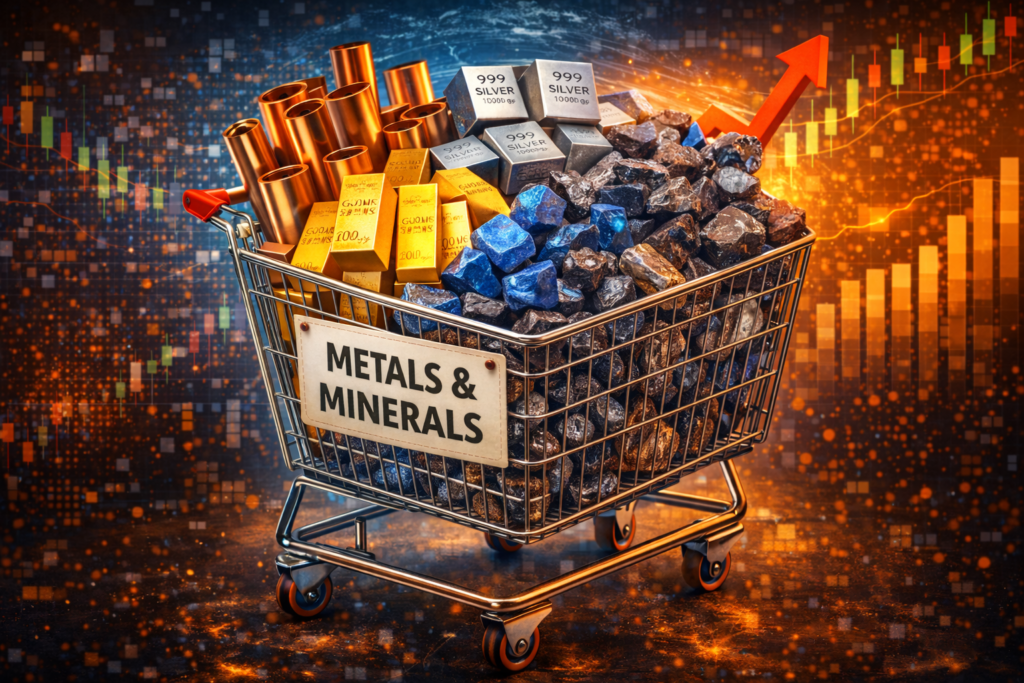
Metals — from iron and copper to lithium and rare earths — are the backbone of industry and the energy transition. Strategic competition for access to these minerals is accelerating. Export controls, investment screening, and state-backed acquisitions are turning minerals into geopolitical levers.
When a country restricts exports of an essential metal, downstream industries suffer: carmakers face higher battery costs, builders see steel prices rise, and technology firms delay product launches. Because many metals markets are relatively concentrated by source (a handful of countries or companies), supply disruptions can push prices into multi-year rallies.
For a primer on trade and minerals, the World Bank’s resources are useful: https://www.worldbank.org/en/topic/extractiveindustries
How These Three Sectors Interact — A Risk Multiplier
The scary thing about modern commodity shocks is they don’t happen in isolation. An energy shock raises fertilizer costs, which reduces crop yields and pushes food prices up. Higher food and energy prices fuel inflation, prompting central banks to tighten. Tighter monetary policy can slow growth, reducing metal demand — but if supply is being rationed for strategic reasons, metal prices might stay elevated even as industrial output sputters. Those feedback loops are why policymakers worry about a compound shock rather than a single commodity spike.
In short: energy affects food, food affects political stability, metals affect industrial recovery — and geopolitical maneuvers influence all three.
Who Wins and Who Loses In commodity price wars
Winners in commodity price wars are not always predictable. Producers of scarce commodities can enjoy windfalls, but such gains are often volatile and politically contested. Large commodity traders and vertically integrated firms with diversified sources can profit from arbitrage. On the other hand, consumers, net-importing countries, small manufacturers, and low-income households typically lose.
Moreover, resource-rich governments can experience the “resource curse” if revenues are mismanaged, while resource-poor countries pay the price via higher inflation and slower growth.
Policy Tools — What Works and What Backfires
Governments have a small playbook: strategic reserves, export controls, trade diplomacy, and targeted subsidies. Strategic reserves (oil, grain) can smooth temporary shocks. Export controls may secure domestic supply but exacerbate global shortages and damage trust. Subsidies protect households short-term but strain public finances and can encourage waste.
International coordination — transparent stock releases, mutual aid, and temporary tariff suspensions during crises — works best but is hardest to achieve when political tensions are high.
For thinking about coordinated policy responses, the IMF provides analyses of commodity shocks and policy mixes: https://www.imf.org/en/Topics/commodity-prices
How Businesses and Households Should Prepare
Businesses should reassess supply chains: diversify suppliers, secure long-term contracts where feasible, and hedge price exposure for critical inputs. Manufacturers dependent on metals or energy should consider strategic inventories and flexible designs that can substitute inputs.
Households have fewer levers, but practical steps help: build emergency savings, reduce energy intensity at home, and be mindful of durable goods timing (e.g., delaying vehicle purchases in periods of extreme commodity volatility).
Conclusion: Expect More Volatility — Then Plan for It
Commodity Price Wars are a defining risk of our era. They combine geopolitics, climate stressors, policy reactions, and structural market features to create shocks that ripple through economies and across societies. The next major shock could be larger precisely because these forces now reinforce one another.
The good news is that smarter policies and better risk management — at both corporate and household levels — can blunt the worst effects. Strategic reserves, diversified supply chains, timely international cooperation, and policies that shield the most vulnerable while preserving market incentives will reduce the human cost.
We live in a world where raw materials are not just inputs but instruments of power. Understanding that reality is the first step toward resilience.
Explore how Supply Chain Wars are reshaping global trade, increasing costs, disrupting businesses, and making international commerce riskier in a divided world economy.