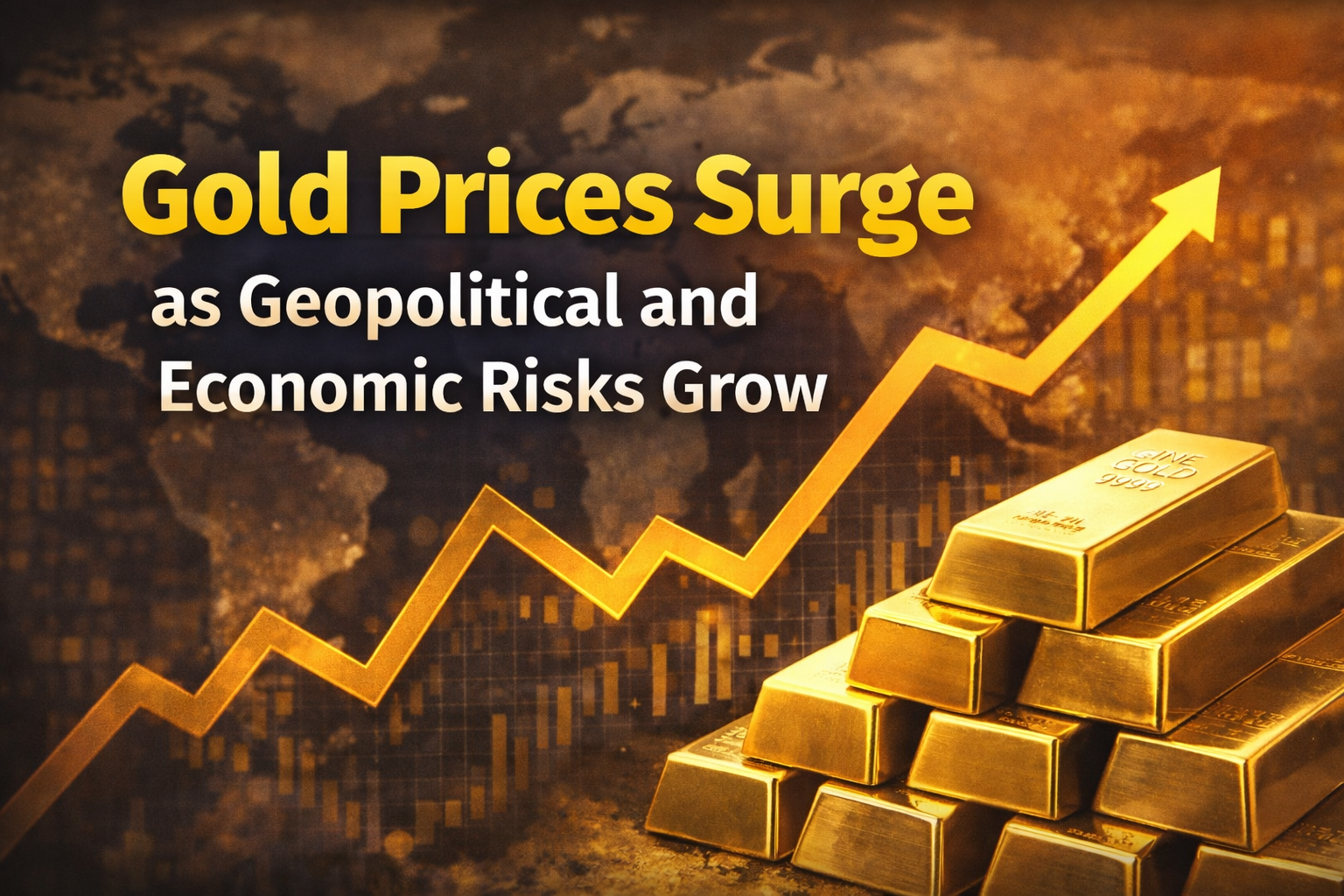
Gold Prices are surging as geopolitical tensions, inflation fears, and economic risks grow worldwide. Here’s why investors are turning back to gold in uncertain times.
Table of Contents
Introduction: A Familiar Flight to Safety
As global headlines grow darker and economic signals become harder to interpret, Gold Prices are once again commanding attention. In recent months, investors around the world have increased their exposure to gold, pushing prices higher amid rising geopolitical tensions, stubborn inflation concerns, and fears of slower economic growth.
Gold has long been viewed as a refuge in times of uncertainty. While modern financial markets offer countless investment options, the appeal of this ancient asset remains remarkably strong. Today’s surge reflects not just short-term market moves, but deeper anxieties about where the global economy may be headed.
This article explores why gold is rallying, what risks are driving investor behavior, and whether the current momentum could continue.
Why Gold Traditionally Rises During Uncertainty
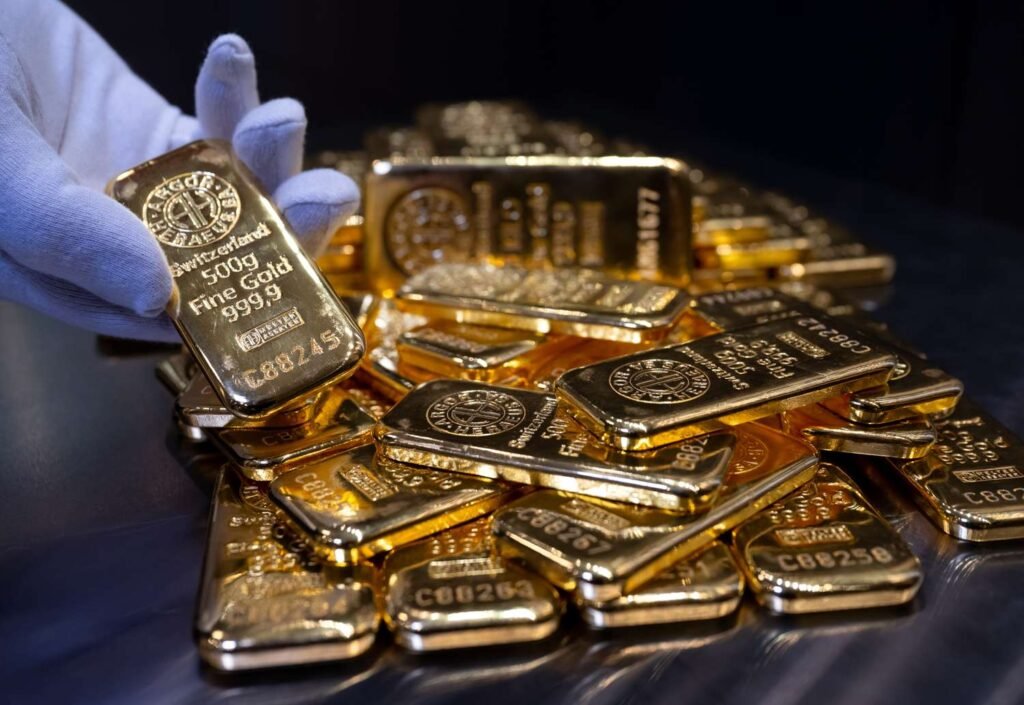
Gold occupies a unique position in the global financial system. Unlike stocks or bonds, it is not tied directly to corporate earnings or government debt. Its value is largely shaped by trust—or the lack of it—in other assets.
When confidence in currencies, markets, or political stability weakens, investors often turn to gold as a store of value. The recent rise in Gold Prices suggests that many see growing risks ahead rather than a smooth economic path.
Geopolitical Tensions Are Back in Focus
One major driver behind the rally is escalating geopolitical tension. Conflicts, diplomatic standoffs, and shifting alliances have increased uncertainty across regions critical to global trade and energy supply.
These tensions create ripple effects:
- Higher energy costs
- Disrupted supply chains
- Increased volatility in equity and currency markets
In such environments, gold often benefits as investors seek assets perceived as neutral and resilient.
For global geopolitical coverage influencing markets, see:
https://www.reuters.com/world
Economic Risks and the Fear of Slow Growth
Beyond geopolitics, economic risks are also fueling demand for gold. Many economies are grappling with slower growth after years of aggressive interest-rate changes aimed at controlling inflation.
While inflation has eased in some regions, it remains a concern for households and policymakers alike. The combination of high borrowing costs and uneven growth has revived fears of recession—or at least prolonged economic stagnation.
These concerns have supported Gold Prices, as investors hedge against both inflation surprises and potential market downturns.
Central Banks and Gold Demand
Another important factor is central bank behavior. In recent years, central banks—especially in emerging markets—have increased gold reserves to diversify away from traditional reserve currencies.
This institutional demand adds a powerful layer of support. When central banks buy gold, it sends a signal that the metal remains relevant even in a highly digital financial system.
Data and analysis on central bank gold holdings can be explored via:
https://www.worldgold.org
Currency Volatility and the Dollar Connection
Gold is typically priced in U.S. dollars, and movements in the dollar often influence gold markets. Periods of dollar weakness can make gold more attractive to non-U.S. investors, pushing prices higher.
At the same time, uncertainty about long-term fiscal policy, government debt levels, and monetary decisions has contributed to renewed interest in hard assets. This dynamic has helped reinforce the upward trend in Gold Prices.
Investor Psychology: Fear, Hedging, and Momentum
Markets are driven not only by data, but by psychology. When uncertainty rises, fear-based hedging becomes more common. Gold benefits from this mindset because it is widely perceived as a hedge against extreme outcomes.
Once prices begin to rise, momentum can attract additional buyers—from institutional funds to retail investors—further amplifying gains. This self-reinforcing cycle helps explain why gold rallies can sometimes accelerate quickly.
How Gold Compares to Other Safe Havens
Gold is not the only asset investors turn to during uncertain times. Government bonds, certain currencies, and even commodities can play similar roles. However, gold stands out because:
- It carries no default risk
- It is globally recognized
- It has thousands of years of historical precedent
As a result, when multiple risks converge, Gold Prices often outperform other defensive assets.
Is This Rally Sustainable?
Whether gold’s surge continues depends on how current risks evolve. Key factors to watch include:
- Resolution or escalation of geopolitical conflicts
- Inflation trends and central bank policy shifts
- Economic growth data from major economies
If uncertainty persists, gold could remain well supported. If conditions stabilize, prices may consolidate—but history suggests gold rarely loses its strategic appeal entirely.
What This Means for Individual Investors
For individual investors, rising Gold Prices raise important questions. Gold is often used as a diversification tool rather than a primary growth asset. Financial advisors typically recommend moderation, ensuring gold complements rather than dominates a portfolio.
Understanding personal risk tolerance, time horizon, and investment goals remains essential before increasing exposure.
For general investment education, see:
https://www.investopedia.com
Global Implications of Higher Gold Prices
A sustained rise in gold prices can have broader implications:
- Mining companies may increase production
- Gold-exporting countries could benefit economically
- Jewelry demand may soften due to higher costs
These secondary effects illustrate how movements in gold ripple through multiple sectors of the global economy.
The Timeless Appeal of Gold
Despite technological change and financial innovation, gold’s role remains surprisingly constant. It thrives on uncertainty, distrust, and the human desire for stability in unpredictable times.
The current surge in Gold Prices reflects not just short-term market dynamics, but deeper questions about global economic direction and political stability.
Conclusion: A Signal Worth Watching
Gold’s recent rally is more than a headline—it is a signal. It suggests that investors are bracing for continued volatility and are seeking protection against a wide range of risks.
Whether the future brings calm or further turbulence, gold’s renewed strength highlights its enduring role in the global financial system. For now, as geopolitical and economic risks grow, gold is once again shining brightly.
Why oil prices remain critical to the U.S. Economy in 2026. Discover how energy costs influence inflation, jobs, consumer spending, markets, and America’s financial stability.