Latest January 2026 Jobs Data shows Americans are increasingly worried about job security, hiring slowdowns, and future employment stability despite steady unemployment figures.
Table of Contents
Introduction: A New Kind of Economic Concern
As January 2026 unfolds, the U.S. economy presents a confusing picture. Official indicators suggest stability—unemployment remains relatively low, and mass layoffs are not widespread across all sectors. Yet public sentiment tells a different story. The Jobs Data released at the start of the year has sparked a growing debate: Why are Americans still so worried about work?
Unlike past downturns, today’s anxiety is subtle but widespread. People are employed, yet uneasy. Businesses are operating, yet cautious. This gap between numbers and emotions is shaping how Americans spend, save, and plan their futures.
This blog explores what the latest January 2026 employment figures really mean—and what Americans are actually worried about beneath the surface.
Understanding the January 2026 Jobs Data
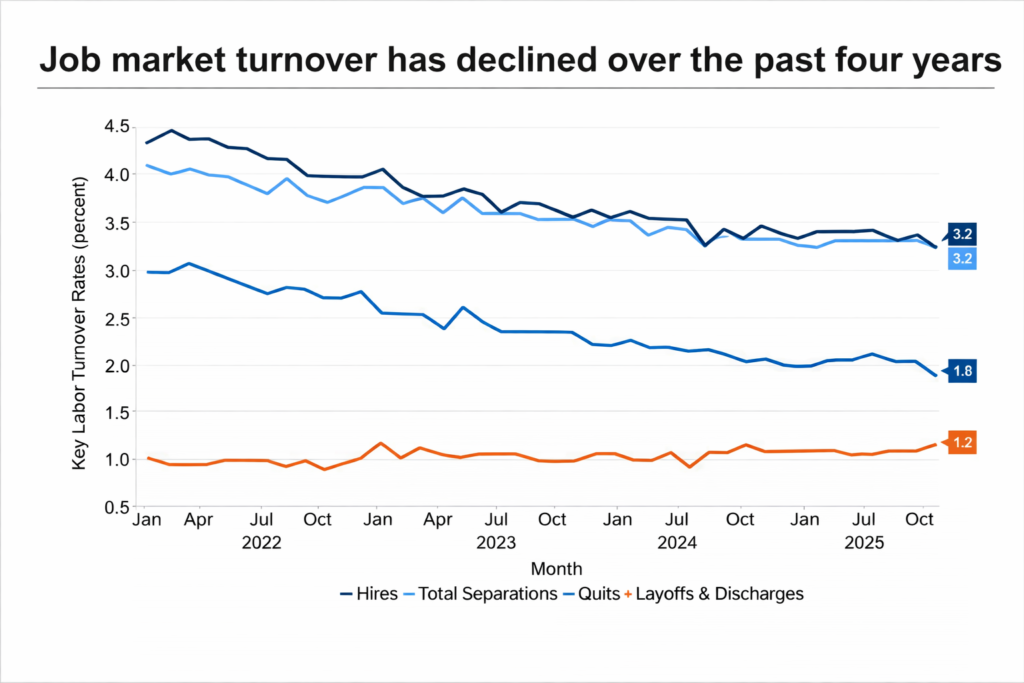
At first glance, the latest Jobs Data does not signal a crisis. Payroll growth continues, though at a slower pace than previous years. Unemployment remains manageable, and certain industries—healthcare, logistics, and energy—are still hiring.
However, deeper analysis shows important shifts:
- Job growth is uneven across sectors
- Hiring has slowed significantly in white-collar and tech roles
- Temporary and contract positions are rising faster than full-time jobs
These details matter. While the economy may appear “fine” on paper, the quality and security of jobs are changing—and workers feel it.
For official labor statistics, readers can explore the U.S. Bureau of Labor Statistics:
https://www.bls.gov
Why Americans Don’t Feel Reassured
1. Job Security Feels Fragile
Even with employment, many workers fear sudden layoffs. Corporate restructuring, automation, and cost-cutting have become common strategies. Employees sense that loyalty no longer guarantees stability.
This fear is not irrational. Recent years have shown that profitable companies can still reduce staff overnight. The Jobs Data reflects employment levels—but not emotional confidence.
2. Slowing Hiring Momentum
January 2026 data indicates that companies are hiring—but cautiously. Positions take longer to fill, recruitment budgets are tighter, and internal approvals slow the process.
For job seekers, this means:
- More applications per opening
- Longer waiting periods
- Increased competition
This slowdown fuels uncertainty, especially among recent graduates and career switchers.
3. The Rise of “Invisible Underemployment”
A growing number of Americans are technically employed but underutilized. They may be:
- Working part-time involuntarily
- Overqualified for their roles
- Freelancing without benefits
While the Jobs Data may count these individuals as “employed,” their financial and emotional reality is far less stable.
Technology and the Fear of Replacement
Automation and artificial intelligence are reshaping work faster than most expected. Tools powered by AI now perform tasks once reserved for analysts, writers, customer service agents, and even junior programmers.
The concern is not just job loss—it’s relevance.
Workers worry:
- Will my skills still matter in two years?
- Can I adapt fast enough?
- Will new roles pay as well as old ones?
This unease does not always show up in unemployment statistics, but it strongly influences public mood.
For insights into technology and labor trends, see:
https://www.weforum.org
Generational Anxiety in the Workforce
Younger Workers
Gen Z and younger millennials face a difficult entry point. They see:
- High education costs
- Fewer entry-level roles
- Rising living expenses
The Jobs Data may show opportunity, but young workers often feel locked out of meaningful career growth.
Mid-Career Professionals
Those in their 30s and 40s worry about becoming “too expensive” to retain. If layoffs occur, rehiring at similar pay levels becomes harder.
This group feels trapped—earning enough to lose, but unsure how replaceable they are.
Older Workers
Late-career employees fear age bias and skill gaps. Even minor disruptions can permanently alter retirement plans.
Consumer Behavior Reflects Employment Fear
Economic confidence is shaped less by inflation now—and more by employment outlook.
Because of job concerns, Americans are:
- Delaying home purchases
- Reducing discretionary spending
- Increasing emergency savings
This cautious behavior can slow economic growth, creating a feedback loop where uncertainty reinforces itself.
The Federal Reserve tracks these behavioral trends closely:
https://www.federalreserve.gov
Media Headlines vs Real-Life Experience
One reason anxiety persists is the mismatch between headlines and personal experience.
Media reports often emphasize:
- “Strong labor market”
- “Resilient economy”
But individuals experience:
- Frozen promotions
- Shrinking teams
- Increased workloads without pay growth
When personal reality conflicts with official Jobs Data summaries, trust erodes.
What Businesses Are Learning
Smart employers are realizing that reassurance matters as much as wages.
Companies responding effectively are:
- Communicating transparently about future plans
- Offering reskilling opportunities
- Prioritizing internal mobility
Those that ignore employee anxiety risk higher turnover—even if layoffs never happen.
Government Perspective on the Latest Jobs Data
Policymakers see January 2026 as a turning point. While emergency measures are unnecessary, confidence-building has become a priority.
Key focus areas include:
- Workforce retraining programs
- Support for emerging industries
- Incentives for long-term hiring
The challenge is psychological as much as economic.
What Americans Want Most Right Now
Based on sentiment surveys and labor trends, workers are not demanding perfection. They want:
- Predictability
- Fair opportunity
- A sense of control over their future
The Jobs Data provides numbers—but trust comes from stability people can feel.
How Workers Can Respond to Uncertainty
While systemic change takes time, individuals can reduce stress by:
- Continuously upgrading skills
- Building financial buffers
- Expanding professional networks
- Staying informed without panic
Preparation restores confidence—even when the broader picture feels unclear.
The Bigger Picture
The January 2026 employment landscape shows that modern economic fear is quieter than past recessions—but just as powerful. Americans are not panicking; they are preparing. And that shift explains why worry persists even when the Jobs Data looks stable.
The future of the U.S. economy will depend not only on how many jobs exist—but on how secure people feel holding them.
Conclusion
The latest January 2026 Jobs Data reveals an important truth: economic health cannot be measured by numbers alone. Beneath steady employment figures lies a deep concern about stability, relevance, and long-term security.
Until Americans feel confident that their jobs are not just available—but dependable—anxiety will remain part of the national mood. Understanding this gap between data and emotion is essential for businesses, policymakers, and workers navigating the year ahead.
Jobs Anxiety is emerging as the biggest concern in the U.S. economy, overtaking inflation fears. Learn why workers are worried about employment, job security, and the future of work.