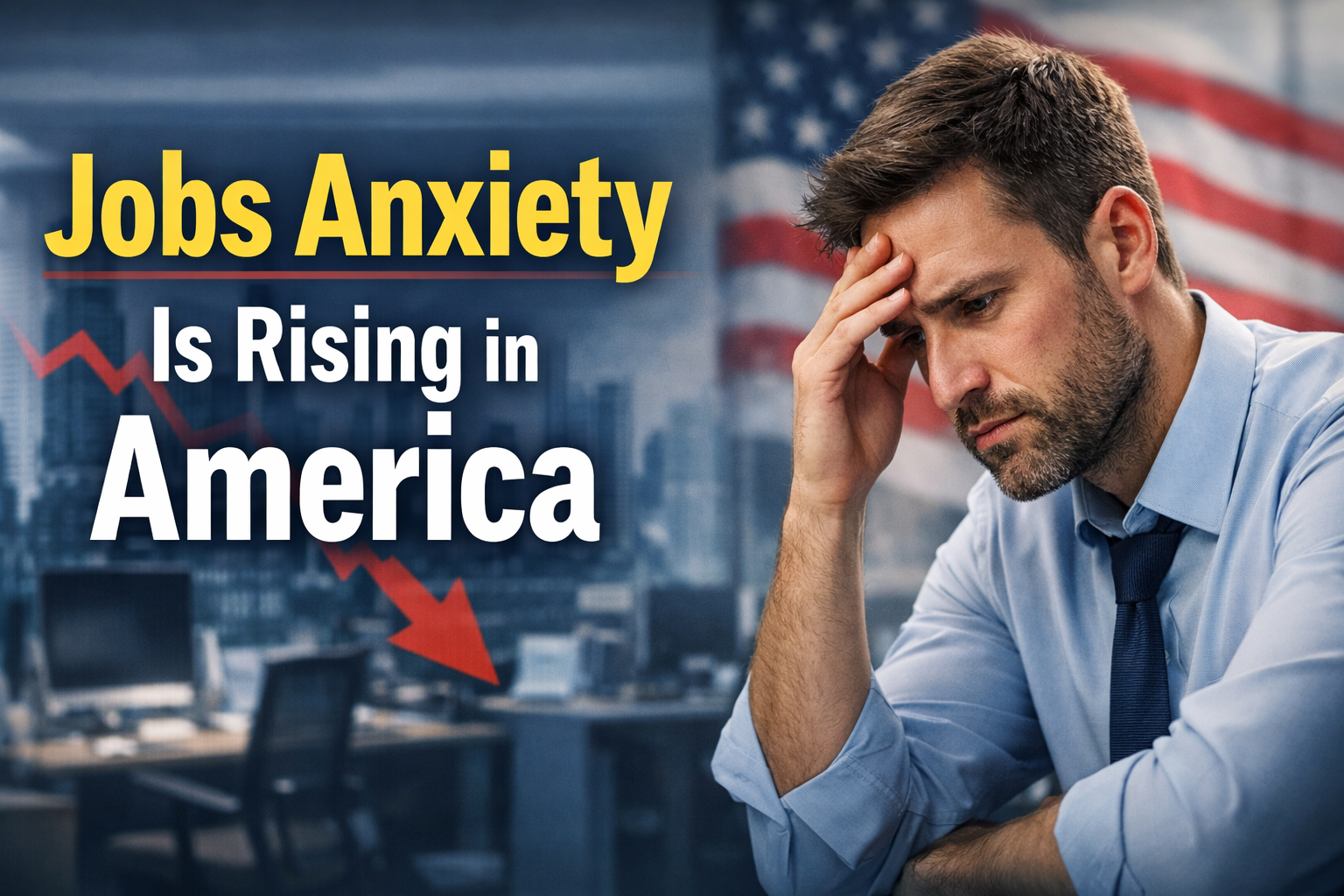
Jobs Anxiety is emerging as the biggest concern in the U.S. economy, overtaking inflation fears. Learn why workers are worried about employment, job security, and the future of work.
Table of Contents
Introduction: A Shift in Economic Fear
For nearly two years, inflation dominated conversations in the United States. Rising grocery bills, expensive fuel, and unaffordable housing created a shared sense of financial stress. But as inflation slowly cools, a new concern has taken center stage—Jobs Anxiety.
Across offices, factories, and remote workspaces, Americans are increasingly worried not about prices, but about paychecks themselves. Layoff headlines, hiring freezes, and rapid technological change have created a climate where job security feels fragile. Even workers who are currently employed are asking a troubling question: Will my job still exist next year?
This shift marks a critical change in the U.S. economic mood—and it has deep implications for consumers, businesses, and policymakers alike.
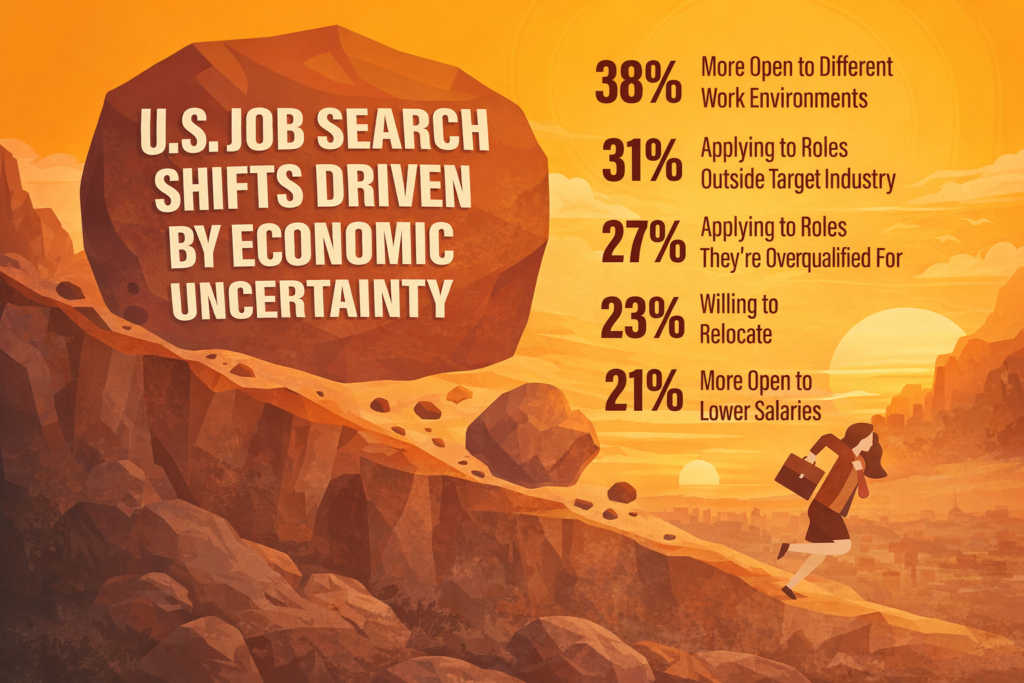
What Is Jobs Anxiety?
Jobs Anxiety refers to the growing fear among workers that their employment is unstable or at risk. It goes beyond simple unemployment numbers. Even when official data shows low unemployment, anxiety can remain high if people believe layoffs are imminent or career paths are shrinking.
This anxiety is driven by several factors:
- Fear of layoffs and downsizing
- Uncertainty caused by automation and AI
- Contract and gig work replacing stable jobs
- Economic signals that feel contradictory
In short, people may be working—but they don’t always feel safe.
Why Inflation Fear Is Fading
Inflation has not disappeared, but its emotional grip on Americans has loosened. Several reasons explain this shift:
- Slowing Price Growth
Inflation rates have moderated compared to their peak. While prices remain high, the shock factor is lower than before. - Wage Adjustments
Some sectors have seen wage increases that partially offset inflation, giving workers temporary relief. - Adaptation
Consumers have adjusted spending habits—cutting discretionary expenses and finding alternatives.
As inflation fear stabilizes, mental and financial attention naturally shifts to the next major risk: employment stability.
Why Jobs Anxiety Is Rising Now
1. Layoffs in High-Visibility Industries
Technology, media, and finance sectors have seen large-scale layoffs. These industries once symbolized stability and growth, so job cuts there send a strong psychological signal across the economy.
Even workers outside these sectors feel the ripple effect. If “safe” jobs aren’t safe anymore, what is?
2. Artificial Intelligence and Automation
AI tools are improving faster than expected. From customer support to data analysis and content creation, automation is changing how work is done.
While technology creates new jobs, it also eliminates others—and the transition period fuels Jobs Anxiety. Workers worry their skills may become outdated faster than they can adapt.
3. Rise of Contract and Gig Work
Many companies prefer flexible labor models. Freelancing, contract roles, and short-term employment reduce costs for businesses but increase uncertainty for workers.
Without long-term contracts, benefits, or clear career growth, anxiety becomes a constant background noise in professional life.
4. Confusing Economic Signals
The U.S. economy sends mixed messages:
- Low unemployment
- Strong consumer spending
- Yet persistent layoffs and hiring freezes
This contradiction makes people distrust official indicators. Emotional reality often matters more than statistics.
How Jobs Anxiety Affects Consumer Behavior
When people fear job loss, they behave differently—even if they are still earning.
Reduced Spending
Consumers delay big purchases like homes, cars, and travel. This caution slows economic growth.
Increased Savings
Emergency funds become a priority. People save more “just in case,” reducing money circulation.
Career Paralysis
Workers avoid risks such as switching jobs, starting businesses, or demanding raises—even when opportunities exist.
Over time, these behaviors can quietly weaken economic momentum.
Mental Health and Jobs Anxiety
Jobs Anxiety is not just an economic issue—it’s a psychological one.
Chronic job stress can lead to:
- Sleep problems
- Anxiety disorders
- Burnout
- Reduced productivity
Employees who constantly fear layoffs are less creative and less engaged. Ironically, anxiety about losing a job can make people perform worse at it.
This creates a negative loop affecting both workers and employers.
How Businesses Are Responding
Smart companies are beginning to recognize that silence fuels fear.
Some responses include:
- Transparent communication about company finances
- Upskilling and reskilling programs
- Internal mobility instead of layoffs
- Mental health support
Businesses that actively address Jobs Anxiety often retain talent better and maintain higher morale.
Government and Policy Perspective
Policymakers are watching this shift closely. While inflation control remains important, employment confidence is becoming equally critical.
Potential policy responses include:
- Investment in workforce retraining
- Support for emerging industries
- Strengthening social safety nets
- Encouraging small business growth
For more insights on U.S. labor trends, you can explore resources like:
- U.S. Bureau of Labor Statistics: https://www.bls.gov
- Federal Reserve economic data: https://fred.stlouisfed.org
Jobs Anxiety vs. Real Unemployment
It’s important to distinguish perception from reality.
- Unemployment is a measurable statistic.
- Jobs Anxiety is emotional and forward-looking.
A person may be employed today but terrified of tomorrow. This makes Jobs Anxiety harder to solve—it’s about trust, not just numbers.
How Workers Can Reduce Jobs Anxiety
While systemic solutions matter, individuals can take steps to protect themselves:
1. Skill Diversification
Learning complementary skills reduces dependency on a single role.
2. Financial Buffer
Emergency savings can significantly lower stress levels.
3. Network Building
Strong professional networks provide options when uncertainty arises.
4. Staying Informed, Not Obsessed
Understanding trends helps—but constant doom-scrolling increases anxiety without adding control.
The Future Outlook
Jobs Anxiety is likely to remain a defining theme of the U.S. economy in the coming years. Even if inflation continues to ease, employment stability will determine how confident people feel about spending, investing, and planning their lives.
The challenge ahead is not just creating jobs—but creating confidence in jobs.
Conclusion
The U.S. economy is undergoing a psychological transition. Inflation fear once dominated headlines and household discussions, but today, Jobs Anxiety is shaping how Americans think, spend, and plan.
This shift reminds us that economic health is not only about data—it’s about perception, trust, and security. Addressing Jobs Anxiety will require collaboration between businesses, workers, and policymakers. If done right, it could lead to a more resilient and adaptable workforce prepared for the future.
Major policy shifts are reshaping Household Credit Access in 2026, influencing loans, credit cards, mortgages, and borrowing power for U.S. households.