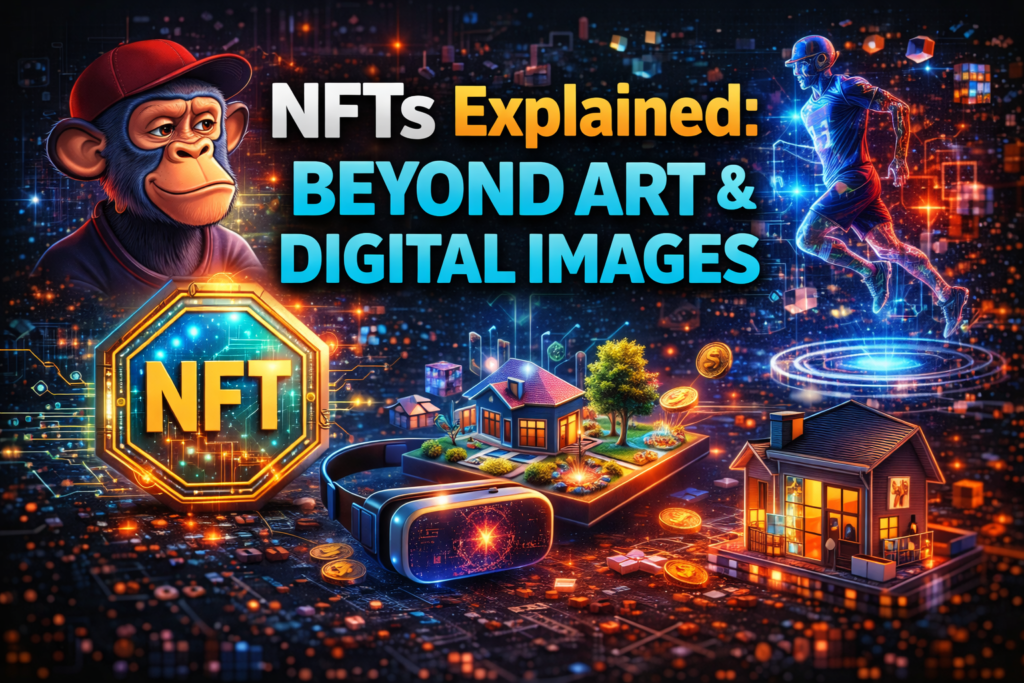
Think NFTs are just overpriced cartoon monkeys? Think again. Discover how NFTs are revolutionizing real estate, legal contracts, and decentralized finance today.
Table of Contents
I remember sitting at a coffee shop in late 2021, watching a guy at the next table try to explain to his confused parents why a pixelated image of an alien was worth more than their suburban home. It was a bizarre era. For most of us, the acronym “NFT” became synonymous with digital art speculation, celebrity hype, and, eventually, a massive market correction that left a lot of people holding very expensive digital receipts.
But here’s the thing: if you think NFTs died when the floor price of Bored Apes plummeted, you’re missing the actual revolution.
As a finance writer who has seen trends come and go, I’ll be the first to admit that the “digital art” phase was mostly noise. However, the underlying technology—the non-fungible token—is one of the most elegant solutions to digital ownership and verification we’ve ever seen. It’s not about the image; it’s about the smart contract attached to it.
In this post, we’re moving past the gallery walls and looking at how this tech is actually starting to solve real-world problems in finance, law, and property.
What are NFTs, Really? (The No-Fluff Version)
Before we dive into the deep end, let’s clear the air. At its simplest, an NFT is a digital certificate of authenticity that lives on a blockchain.
Most things in the digital world are “fungible.” If I send you a PDF of a contract, and you send me back a copy, they are identical and interchangeable. They have no unique “soul.” An NFT changes that. It makes a digital item unique, trackable, and impossible to forge.
In the world of finance, we call this tokenization. We are taking real-world value and “wrapping” it in a digital layer that can be traded 24/7 without needing a room full of lawyers to verify every single transaction.
1. Real Estate and Fractional Ownership
The traditional process of buying a house is, frankly, a nightmare. It’s slow, expensive, and buried under mountains of paperwork. This is where the utility of digital assets starts to get interesting.
Imagine a commercial building worth $10 million. Traditionally, only the ultra-wealthy or institutional REITs could invest in it. By using NFT technology, that building can be “fractionalized.” The ownership is split into 10,000 tokens, each representing a share of the property.
- Instant Settlement: No waiting 30 days for escrow.
- Liquidity: You can sell your 1% stake in an office building as easily as selling a stock.
- Transparency: Every lien, repair history, and tax payment is recorded on the Ethereum blockchain for anyone to verify.
2. Revolutionizing Supply Chains and Provenance
In finance, risk management is everything. If you’re lending money to a company that moves physical goods, you need to know those goods actually exist and aren’t counterfeit.
Global logistics companies are now using NFTs to track items from the factory floor to the retail shelf. Because the token is “non-fungible,” it can represent a specific crate of medication or a high-end luxury watch. When the physical item moves, the digital token moves with it. This creates an unalterable on-chain history of where a product has been.
3. DeFi and Collateralized Loans
This is where the “finance” in decentralized finance (DeFi) gets spicy. We are seeing a rise in NFT-backed loans.
Let’s say you own a valuable digital asset—perhaps a tokenized piece of real estate or even a rare digital collectible. Instead of selling it and triggering a capital gains tax event, you can lock that NFT into a protocol as collateral and borrow liquidity (like stablecoins) against it.
If you don’t pay back the loan, the smart contract automatically transfers the NFT to the lender. No debt collectors, no court dates—just code executing a legal agreement.
4. Intellectual Property and Royalty Streams
For creators, the old model was broken. A musician would sign a deal, get a small cut, and then lose control over secondary sales.
With NFTs, royalties can be hardcoded. If an artist sells a “Royalties NFT” for their song, they get a percentage of every single secondary sale automatically. But it goes further: investors can now buy “shares” of a song’s future streaming revenue. This turns intellectual property into a tradeable crypto asset that provides passive income.
The “Hidden” Tech: Smart Contracts
The real hero here isn’t the monkey picture; it’s the smart contract. This is a self-executing contract with the terms of the agreement directly written into lines of code.
When we talk about NFTs, we are talking about a move toward a “trustless” economy. You don’t have to trust that the seller is telling the truth about an item’s history; you just check the blockchain.
“The shift from ‘Don’t be evil’ to ‘Can’t be evil’ is the fundamental promise of blockchain-based ownership.”
Why the Finance World is Quietly Building
While the headlines were laughing at the “NFT crash,” major financial institutions like JPMorgan Chase were busy building their own private blockchain networks. They aren’t doing this to flip JPEGs. They are doing it because tokenizing traditional assets (bonds, stocks, gold) makes the entire financial system faster and cheaper.
Key Benefits of Tokenization:
- Lower Fees: Removing intermediaries like clearinghouses.
- 24/7 Markets: The blockchain doesn’t close at 4:00 PM on a Friday.
- Programmable Money: Dividends can be paid out automatically to token holders.
Frequently Asked Questions (FAQ)
Are NFTs still a good investment?
It depends on what you’re buying. Buying digital art for the sake of “flipping” it is highly speculative and risky. However, investing in the infrastructure of the NFT ecosystem or tokenized real-world assets is seen by many as the future of modern portfolio management.
How do I store an NFT safely?
You should never keep a high-value asset on an exchange. Use a “cold wallet” or hardware wallet. Since these assets exist on the blockchain, your wallet holds the “keys” that prove you are the owner. If you lose your keys, you lose the asset.
What is “Minting”?
Minting is simply the process of recording a digital item on the blockchain. It’s like getting a document notarized, but instead of a person with a stamp, a network of computers validates the entry.
Can NFTs be used for identity theft?
Actually, they might be the solution to it. “Soulbound tokens” (SBTs) are a type of NFT that cannot be transferred. These could be used for birth certificates, driver’s licenses, or university degrees, making it nearly impossible for someone to forge your credentials.
The Bottom Line
We are currently in the “dial-up” phase of digital ownership. The UI is clunky, the scams are plentiful, and the terminology is confusing. But the shift is happening.
The next time you hear someone scoff at NFTs, remember that they are likely looking at the wrapper, not the contents. We are moving toward a world where your car title, your house deed, and your stock portfolio won’t be pieces of paper in a filing cabinet—they will be secure, liquid tokens in your digital wallet.
The “Art Phase” was just the proof of concept. The “Utility Phase” is where the real money is made.
understanding the DA : click here